Riding a Bike
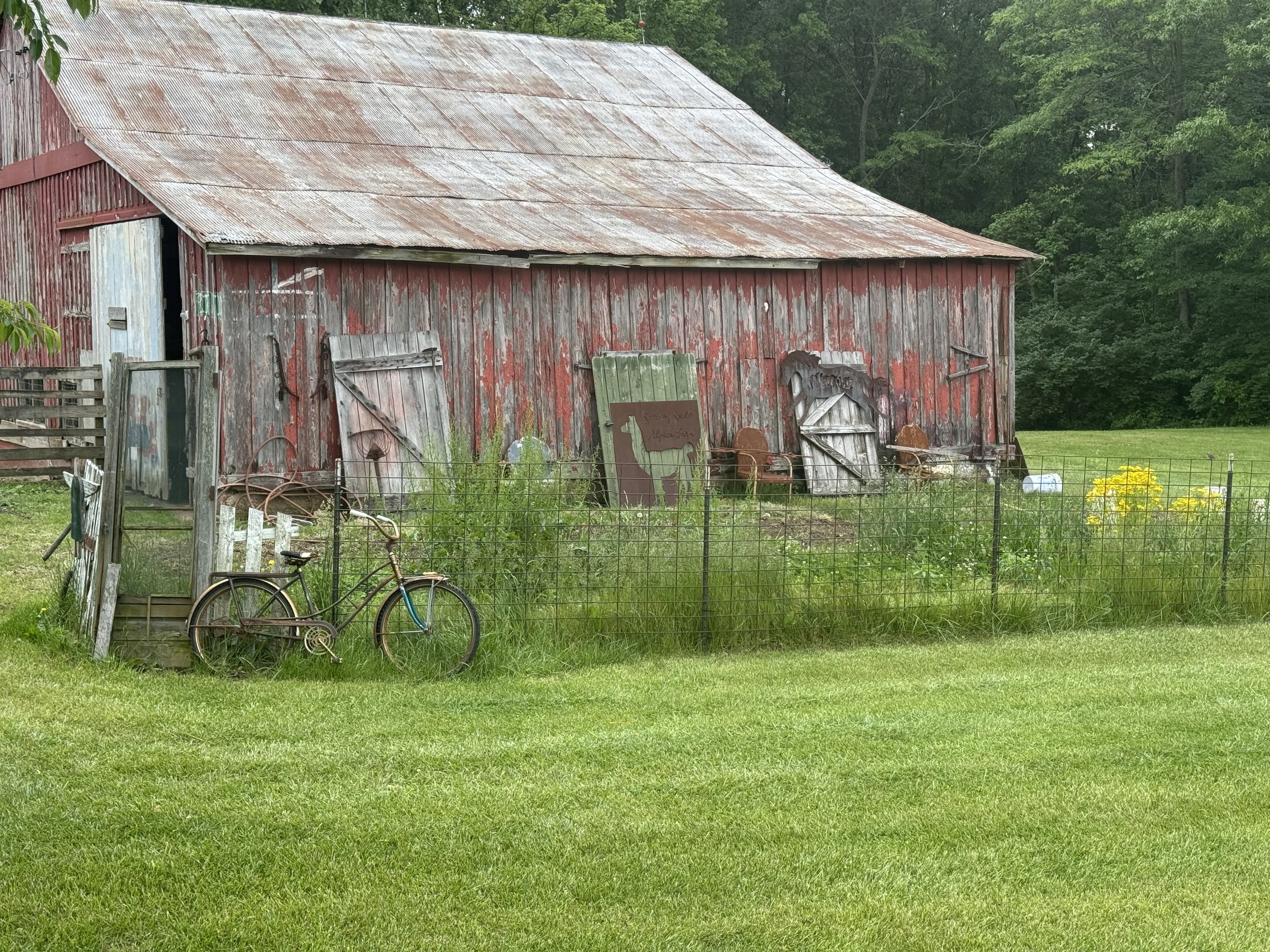
Photo taken in Toledo, IL on Rachelle’s 825-Mile Walking Pilgrimage for Racial Equity
I’ll admit, I hadn’t lived in white neighborhoods where boys and men casually rode their bikes shirtless. Then I moved to Chicago’s West Side in the summer—and suddenly it was everyone. Black and Brown boys and men pedaling by, gloriously shirtless. And my brain, apparently capable of only one observation, offered: So. Much. Skin.
I wasn’t scandalized. In my world, shirtless boys and men had a designated habitat: the beach. “Shirtless males” were firmly filed under Beach Use Only. At the time, my response was simple—surprise.
I am a 77-year-old white woman who thinks of herself as a case study—someone willing to examine her own ignorance and share what she is learning from and about the Black community, particularly those who are descendants of chattel slavery.
Over the past five years, since moving to Chicago, I have continued to grow and change as I engage intentionally with Black individuals and communities, building real relationships. I pay close attention to my responses in different situations, and I find myself wondering how other white people might respond in those same moments.
Which brings me back to that first reaction—So. Much. Skin.
Now I find myself asking a harder question: Does “so much skin” feel playful and ordinary no matter who the skin belongs to? Or do some of us—especially those of us who are white—interpret the same scene differently depending on who is riding the bike?
Because perception does shift. It shifts depending on who occupies the same public space.
In the summer, boys ride their bikes shirtless—it’s ordinary, almost invisible. But does that ordinariness hold for everyone? What assumptions quietly surface in the minds of white observers when the boys are Black? What narratives get activated? Is the same image filtered through a lens of suspicion? And if so, where did those associations come from?
The same questions apply to men. When men ride their bikes shirtless, it can seem commonplace, even carefree. But when the men are Black, does the perception remain the same? Or does something subtle shift in the observer?
Admitting the possibility of implicit bias and social conditioning is not an accusation; it is an invitation.
What began as a light observation of a shirtless cyclist—one small example—opened into a deeper curiosity about perception, challenging me, and perhaps us, to examine how quickly our minds categorize what we see—and how race can quietly and powerfully shape what feels normal, what feels out of place, and what feels threatening.
Radical love,
Rachelle